Product overview
Select by pipe data, operating duty and installation condition
A universal flange adaptor connects a plain-ended water pipe to a flanged valve, pump, meter or fitting. Conflex flange adaptors are selected by the actual outside diameter of the pipe, not by nominal size alone. This is especially important when a project combines ductile iron, steel, PVC or PE pipe systems.
The product family includes universal flange adaptors, restrained flange adaptors and pipe-specific designs. A flange adaptor for PVC pipe or PE pipe also needs the plastic pipe standard, wall class and support arrangement; a ductile iron version is selected against the actual iron-pipe OD and flange schedule.
For accurate flange adaptor dimensions and quotation data, identify the pipe material, measured OD and tolerance, PN rating, flange drilling, service medium, temperature and whether the connection needs angular deflection or axial restraint.
Available configurations
Representative flange adaptor models
These photographs come from the current Conflex product catalogue. Dimensions and availability are confirmed against each enquiry.
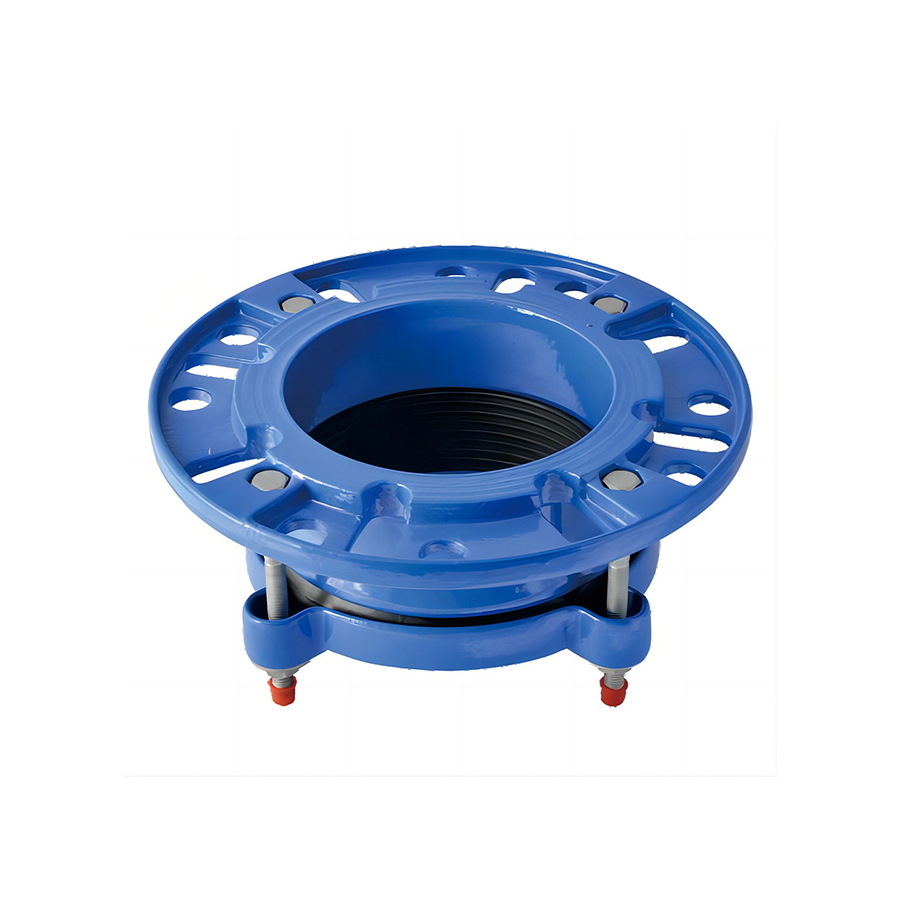
Universal Flange Adaptor
Wide-range mechanical adaptor for plain-end to flange transitions.
View product details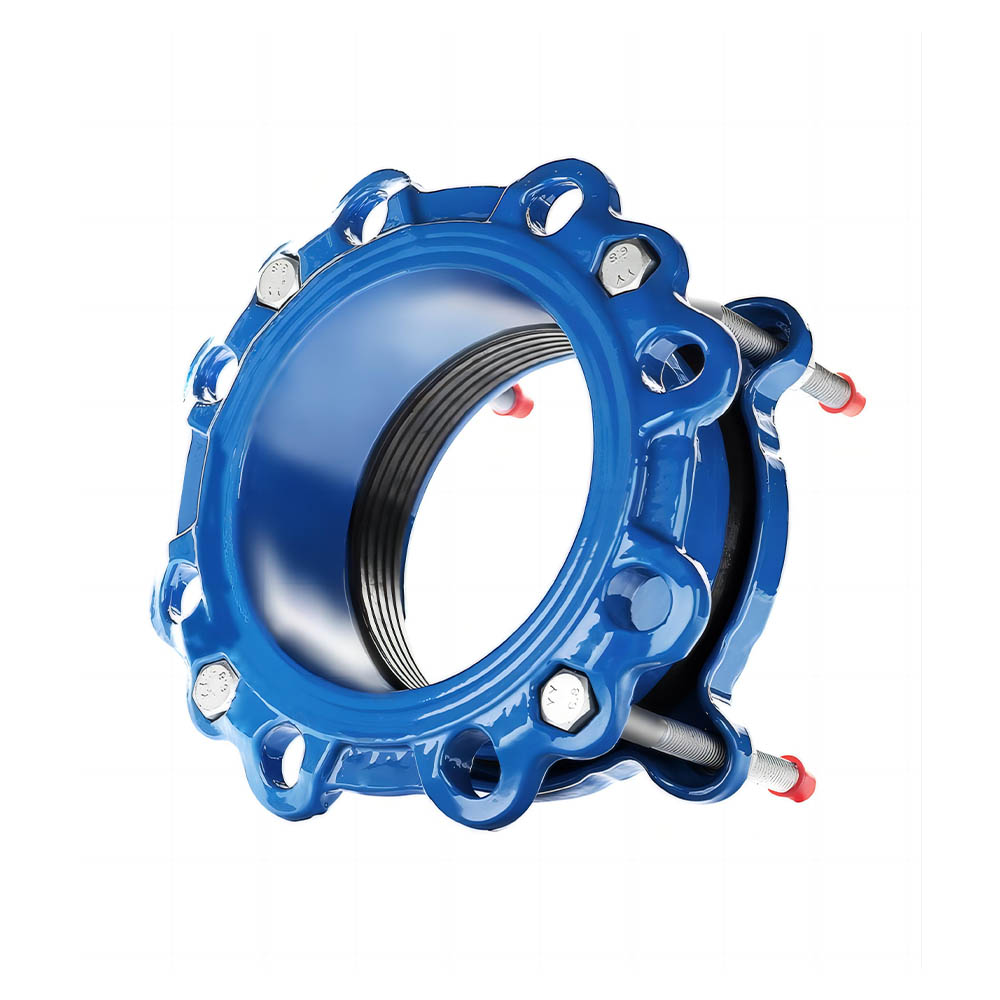
Flange Adaptor for DI Pipe
Pipe-specific option documented for ductile iron pipe connections.
View product details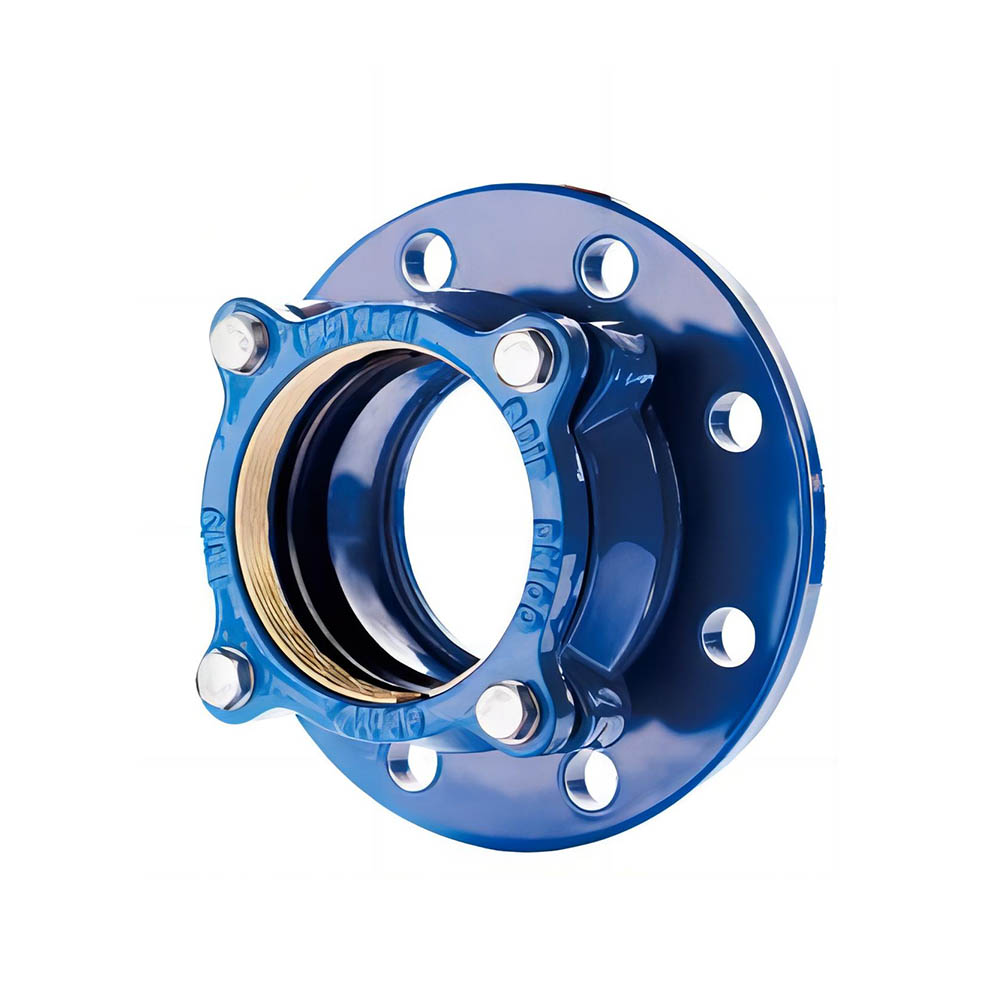
Flange Adaptor for HDPE / PVC
Configuration for compatible plastic-pipe outside diameters.
View product details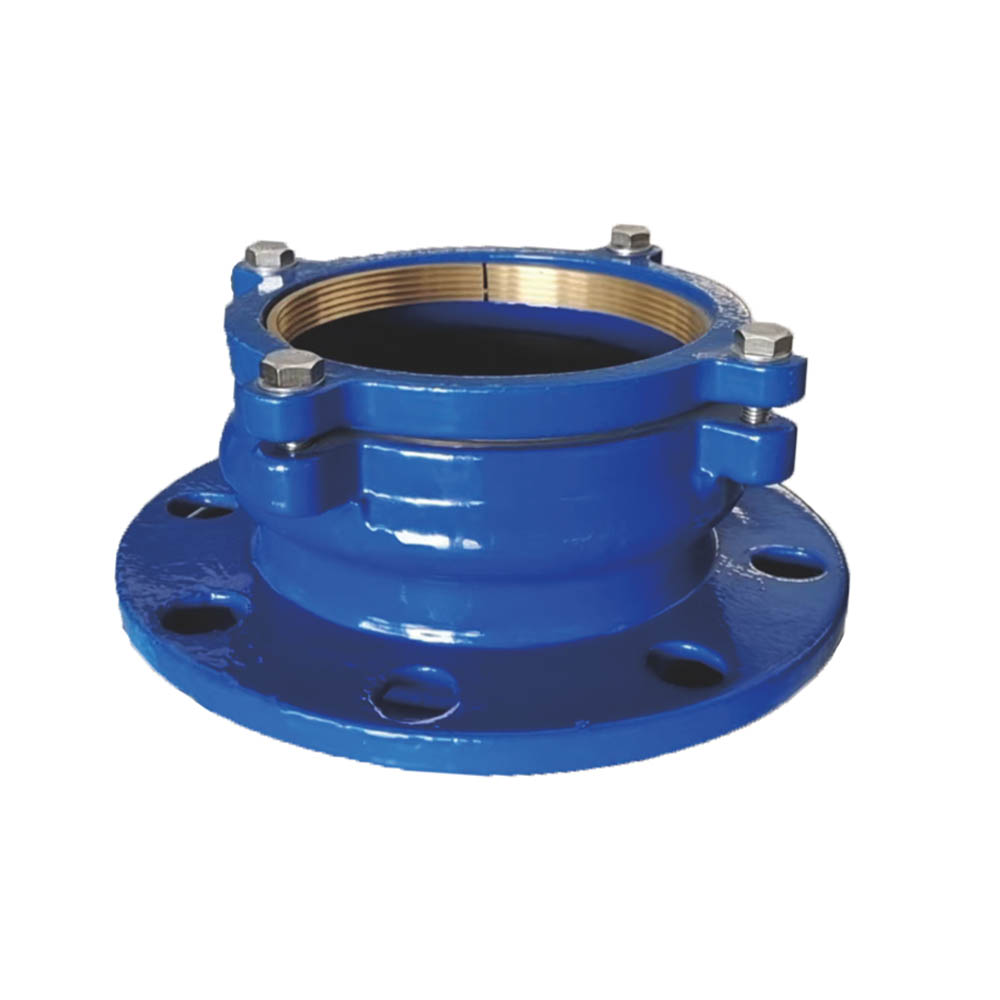
Adjustable Flange Adaptor for PE
PE connection option with project-specific support and restraint review.
View product detailsTechnical reference
Typical documented range
Values below summarize referenced catalogue models, not a blanket rating for every configuration. The approved drawing and quotation govern the supplied product.
- Reference size coverage
- DN40–DN400 universal; pipe-specific ranges extend to DN2000
- Reference pressure classes
- PN10, PN16 and PN25 on the documented universal range
- Primary body material
- Ductile iron GGG50 on documented universal configurations
- Gasket options
- EPDM, SBR or NBR selected for the service medium
- Reference angular allowance
- Up to ±6° total on the documented Universal Flange Adaptor
- Flange drilling
- EN 1092-2, EN 1092-1 or ANSI patterns by order
Typical applications
- Valve connections
- Pipeline extensions
- Plant upgrades
- Mixed-material networks
Pipe and connection context
- Ductile iron pipe
- Steel pipe
- PVC pipe
- PE pipe with the correct support arrangement
Compatibility depends on the selected model, exact OD, pipe condition and confirmed operating duty.
Installation summary
Five checks before commissioning
This summary does not replace the approved model drawing, torque table, project method statement or safety procedure.
Read the installation guide- 1Confirm the pipe OD, flange drilling, pressure class and that all components arrived undamaged.
- 2Clean the pipe surface over a length greater than the insertion depth; remove dirt, scale and sharp projections.
- 3Inspect and correctly orient the sealing ring, using only a lubricant approved for the gasket and service.
- 4Position the adaptor and mating flange, maintain the specified end clearance and check that the annular gap is even.
- 5Seat the gland and tighten bolts evenly in an alternating pattern to the product-specific torque; pressure-test before service.
RFQ checklist
Send these six inputs
If a value is unknown, send a drawing or site photo and mark it for review.
- 1Pipe material and actual outside diameter
- 2Working pressure or PN
- 3Mating flange drilling
- 4Allowable movement or deflection
- 5Service medium and temperature
- 6Installation restraint requirements
Frequently asked questions
Flange Adaptors FAQ
What is the difference between a flange adaptor and a coupling?
A flange adaptor connects a plain-ended pipe to a flanged component. A coupling normally joins two plain-ended pipes.
Can one universal flange adaptor fit different pipe materials?
Selected wide-range products can cover compatible outside diameters across several pipe materials, but the actual OD, surface condition and restraint requirement must be checked.
Do you need the actual pipe OD?
Yes. Nominal diameter is not sufficient because pipe materials and standards can have different outside diameters.
When is a restrained flange adaptor required?
Use a restrained configuration only where the pipeline design requires axial gripping and the pipe material is compatible with the restraint system.
Need a dimensional table or model review?
Include the size range, standard, quantity and destination in your enquiry.
Ready for technical review?