Product overview
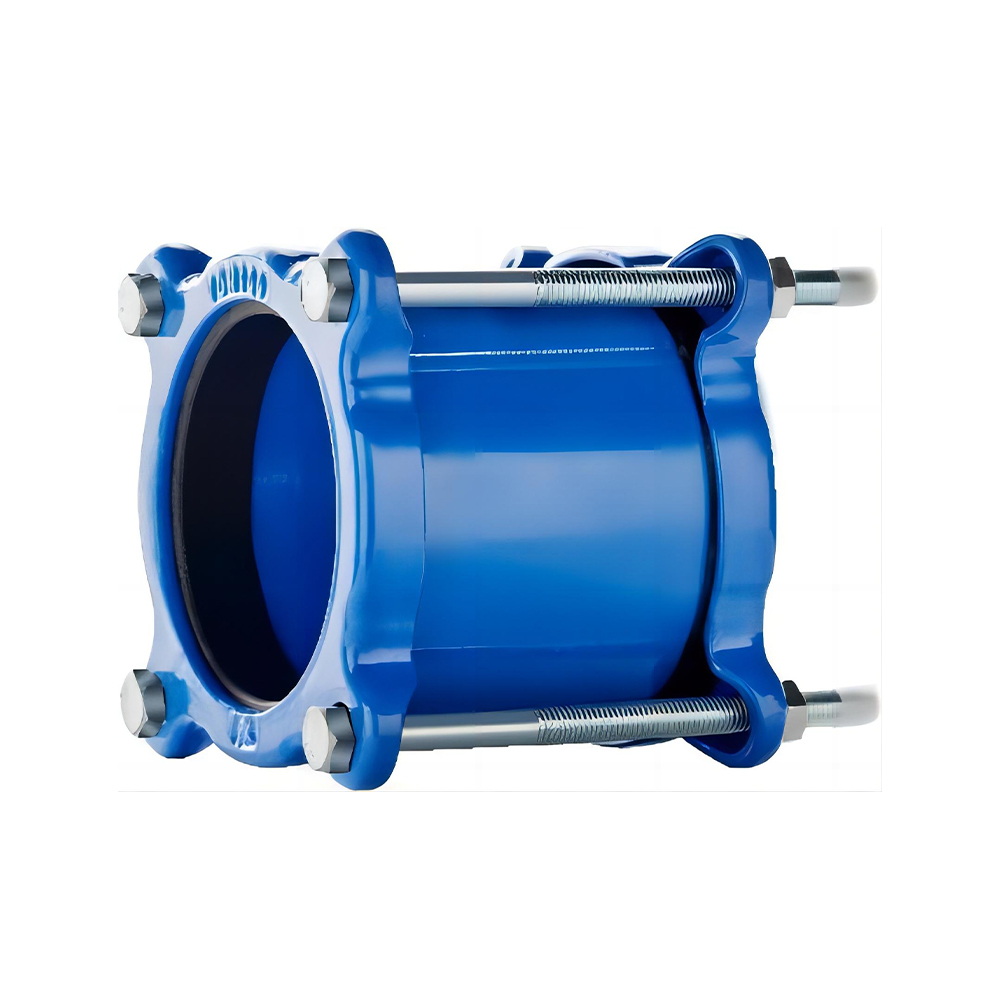
Coupling for DI Pipe
The DI pipe coupling is intended for known ductile iron pipe standards and outside diameters. A pipe-specific product can provide a more focused selection than a wide-range coupling when the network schedule is controlled.
Pipe-specific coupling documented for ductile iron systems.
Technical reference
Technical basis for Coupling for DI Pipe
Selected from the DI pipe standard and actual outside diameter. Pressure class confirmed by ordered size and configuration. Use these points to identify the right drawing—not as a universal rating for every configuration.
- Connection
- Double-socket compression coupling for DI pipe
- Material basis
- Metal sleeve and glands with service-compatible elastomer gaskets
- Reference range
- Selected from the DI pipe standard and actual outside diameter
- Pressure / duty
- Pressure class confirmed by ordered size and configuration
Selection focus
Four checks for this coupling for ductile iron pipe
- 1State the DI pipe standard, DN and measured OD at both ends.
- 2Check surface coating, ovality and end condition.
- 3Confirm working pressure, medium and gasket requirement.
- 4Define external restraint and allowable angular alignment.
Installation notes for Coupling for DI Pipe
- Clean sound pipe surface is required under both gaskets.
- Centre the sleeve across the end gap before tightening.
- Pressure-test and inspect the complete joint circumference.
Choosing Coupling for DI Pipe
Specify the DI Pipe Coupling for two known ductile iron pipe ends. A universal coupling is more appropriate when the joint crosses materials or OD series, while a restrained connection is considered only after the design axial load and grip compatibility are known.
Compare all pipe couplingsCompare configurations
Related pipe couplings
Frequently asked questions
Coupling for DI Pipe FAQ
What makes a DI pipe coupling different from a wide-range coupling?
The DI coupling is selected around a known ductile iron pipe standard and outside diameter. A wide-range coupling is more suitable when materials or OD series vary across an existing network.
How should two ductile iron pipe ends be prepared for coupling?
Clean the gasket contact areas, remove loose deposits and check both ends for damage and ovality. Mark the insertion positions so the sleeve can be centred across the specified gap.
Can a DI coupling be used as a restrained joint?
A standard compression coupling should not be assumed to resist axial thrust. If restraint is required, define the load and use a separately engineered restraint system or an approved restrained connection.
Ready for technical review?