Product overview
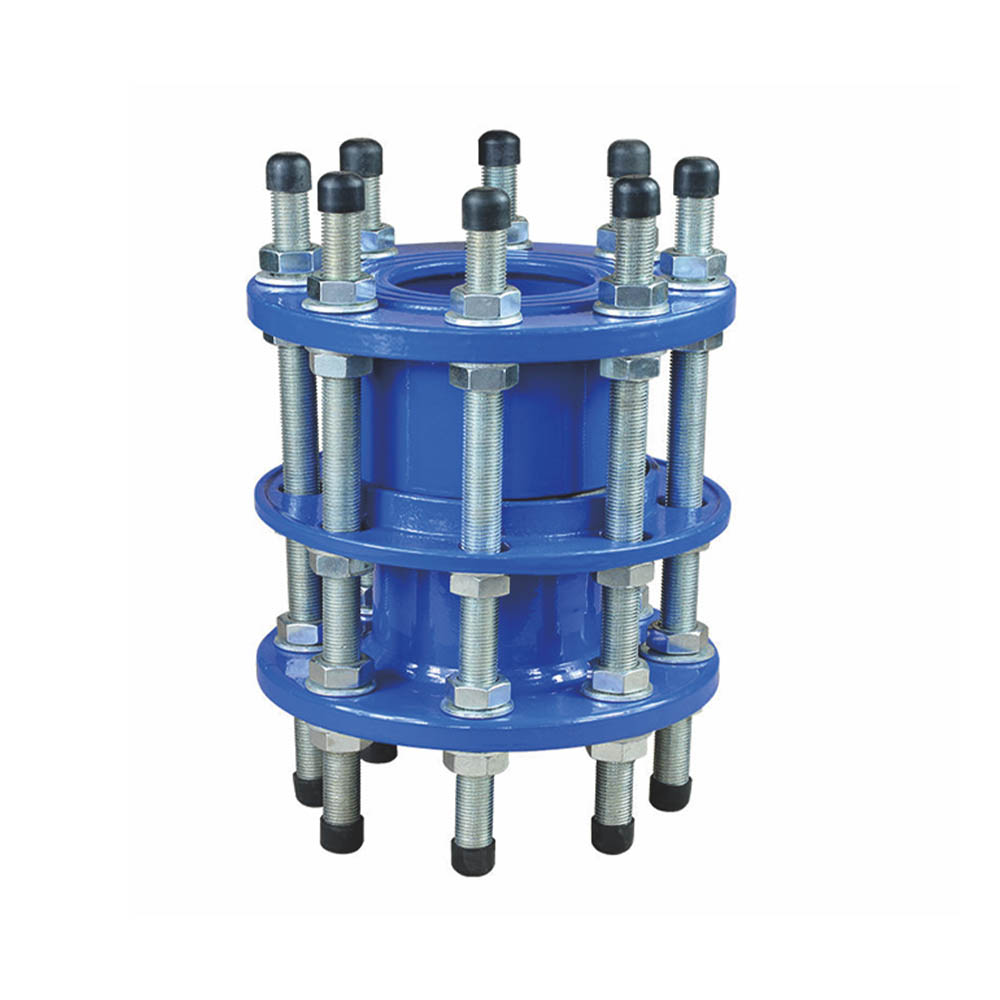
DI Dismantling Joint
The DI Dismantling Joint is the documented ductile iron option in the Conflex range. It is intended for waterworks layouts where a compact flanged assembly and future equipment removal must be planned together.
Ductile iron configuration for flanged valves, meters and waterworks equipment.
Technical reference
Technical basis for DI Dismantling Joint
Reference catalogue coverage DN50–DN2000. Reference classes PN10, PN16, PN25 and PN40; approved size schedule governs. Use these points to identify the right drawing—not as a universal rating for every configuration.
- Connection
- Double-flanged telescopic connection with tie rods
- Material basis
- Documented GGG50 ductile iron body with project-selected gasket and fasteners
- Reference range
- Reference catalogue coverage DN50–DN2000
- Pressure / duty
- Reference classes PN10, PN16, PN25 and PN40; approved size schedule governs
Selection focus
Four checks for this ductile iron dismantling joint
- 1Confirm the face-to-face installation gap and required axial adjustment.
- 2Match both mating flange drillings and the project pressure class.
- 3Define thrust restraint, pipe supports and tie-rod arrangement.
- 4State medium, temperature, coating, gasket and fastener requirements.
Installation notes for DI Dismantling Joint
- Use the adjustment only within the approved drawing range.
- Do not use the joint as a substitute for anchors or an expansion joint.
- Tighten the gland and tie rods to the product-specific sequence and torque.
Choosing DI Dismantling Joint
Choose the DI version when the project schedule calls for a cast ductile iron body and standard waterworks pressure classes. Compare a fabricated steel VSSJA option when face-to-face dimensions, coating or construction must be engineered around a special layout.
Compare all dismantling jointsCompare configurations
Related dismantling joints
Frequently asked questions
DI Dismantling Joint FAQ
Where is a DI dismantling joint normally installed in a water pipeline?
It is commonly positioned beside flanged valves, pumps or flow meters where controlled axial adjustment helps installation and later equipment removal. The surrounding pipework still needs the anchors, supports and thrust control defined by the piping design.
Which dimensions are needed for a ductile iron dismantling joint enquiry?
Provide the nominal diameter, both flange drillings, working pressure, available face-to-face gap and required adjustment. Include the medium, temperature, coating, gasket and fastener requirements so the quotation can be matched to the project schedule.
Can the tie rods be used to pull misaligned flanges together?
No. Align and support the mating flanges before tightening. The telescopic section must remain within the approved drawing range, and the gland bolts and tie rods must be tightened in the specified sequence.
Ready for technical review?