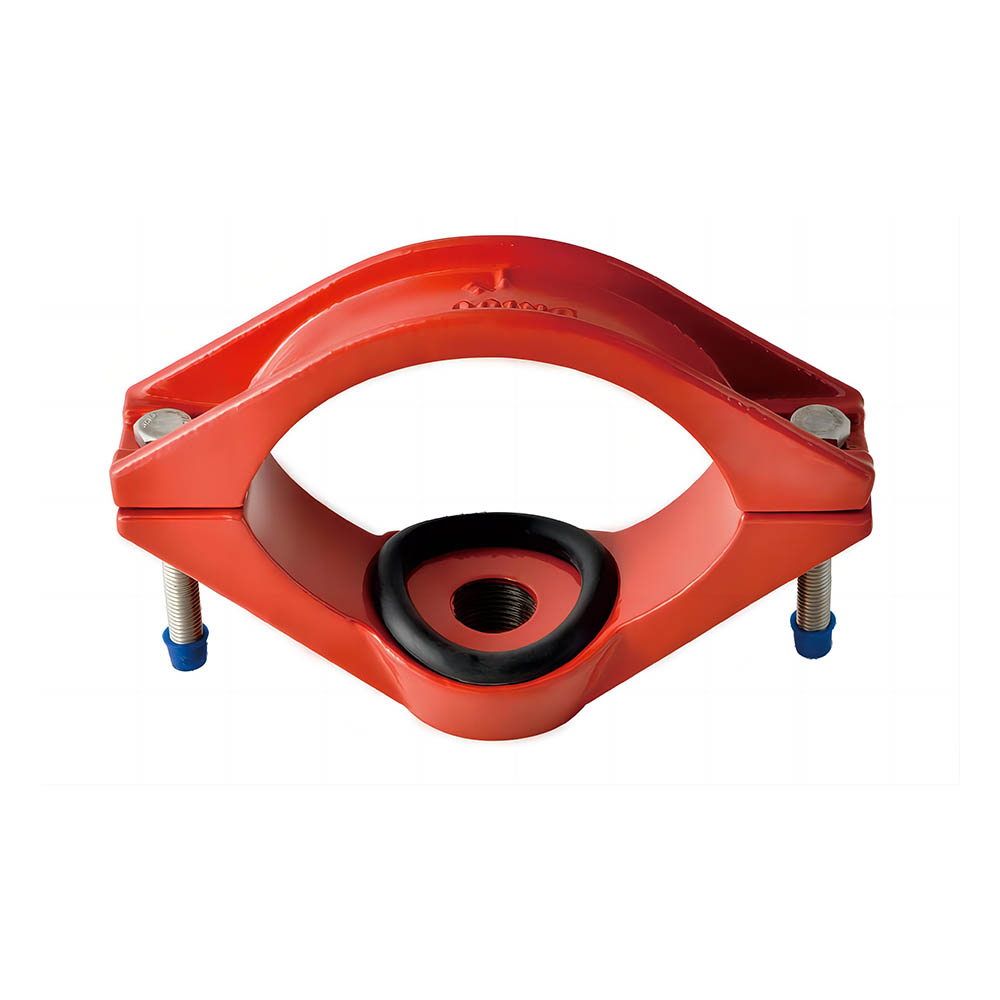
Product overview
Saddle Clamp for DI Pipe
This pipe-specific saddle is selected from the DI pipe standard and outside diameter. It provides a practical branch connection when outlet type, tapping method and installation safety are planned before work starts.
Pipe-specific branch saddle documented for ductile iron pipe.
Technical reference
Technical basis for Saddle Clamp for DI Pipe
Reference DI saddle coverage DN60–DN300. Reference classes PN10 and PN16. Use these points to identify the right drawing—not as a universal rating for every configuration.
- Connection
- Two-part saddle body with threaded or project-selected outlet
- Material basis
- Documented GGG50 ductile iron body with elastomer gasket options
- Reference range
- Reference DI saddle coverage DN60–DN300
- Pressure / duty
- Reference classes PN10 and PN16
Selection focus
Four checks for this saddle clamp for ductile iron pipe
- 1Provide the DI pipe standard, DN and measured OD.
- 2Specify outlet size, thread or flange standard and orientation.
- 3Confirm pressure, medium and whether tapping is live or isolated.
- 4State coating, gasket and bolt requirements.
Installation notes for Saddle Clamp for DI Pipe
- The utility controls the drilling and live-tapping procedure.
- Seat the gasket on a clean, undamaged pipe surface.
- Tighten both sides evenly to avoid rotating the outlet.
Choosing Saddle Clamp for DI Pipe
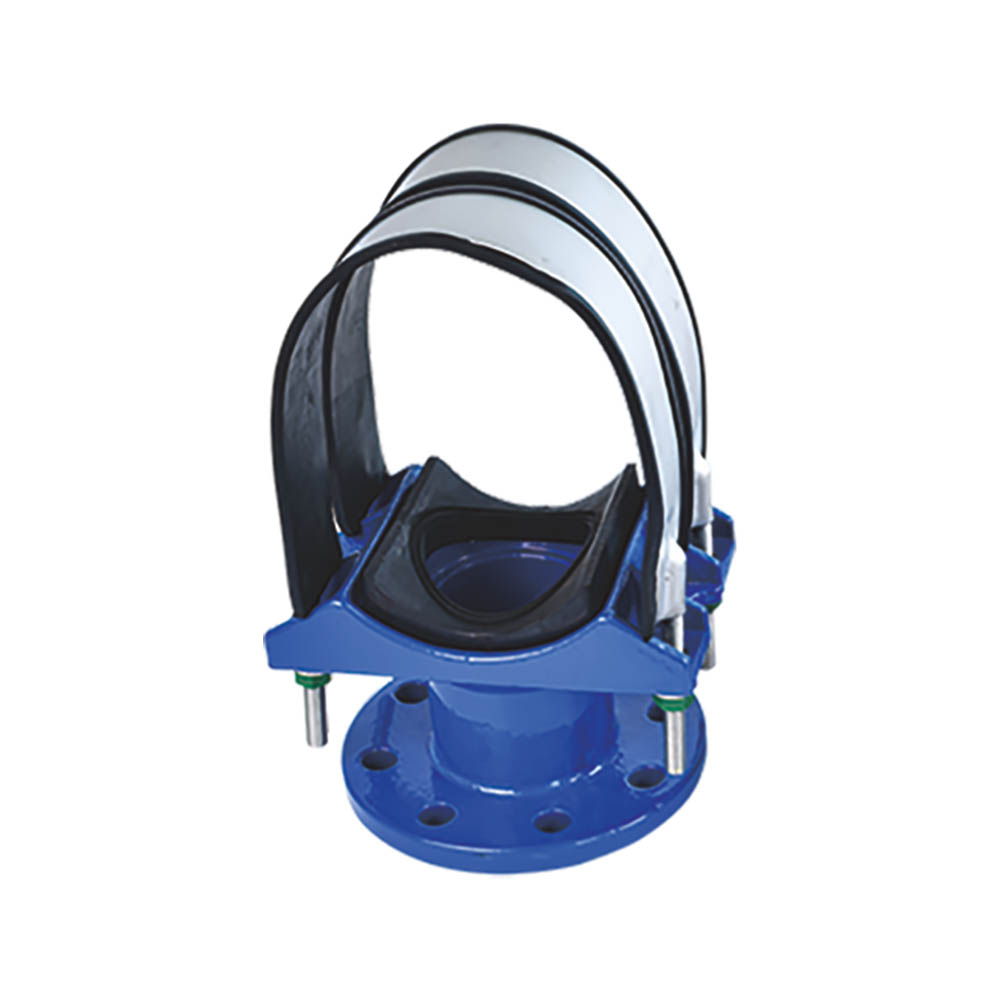
Choose the DI saddle when the main is confirmed as ductile iron and a dedicated fit is preferred. Compare the universal saddle for mixed networks, and the flange-tee version when the branch or connected valve requires a flanged outlet rather than a smaller service connection.
Compare all saddle clampsCompare configurations
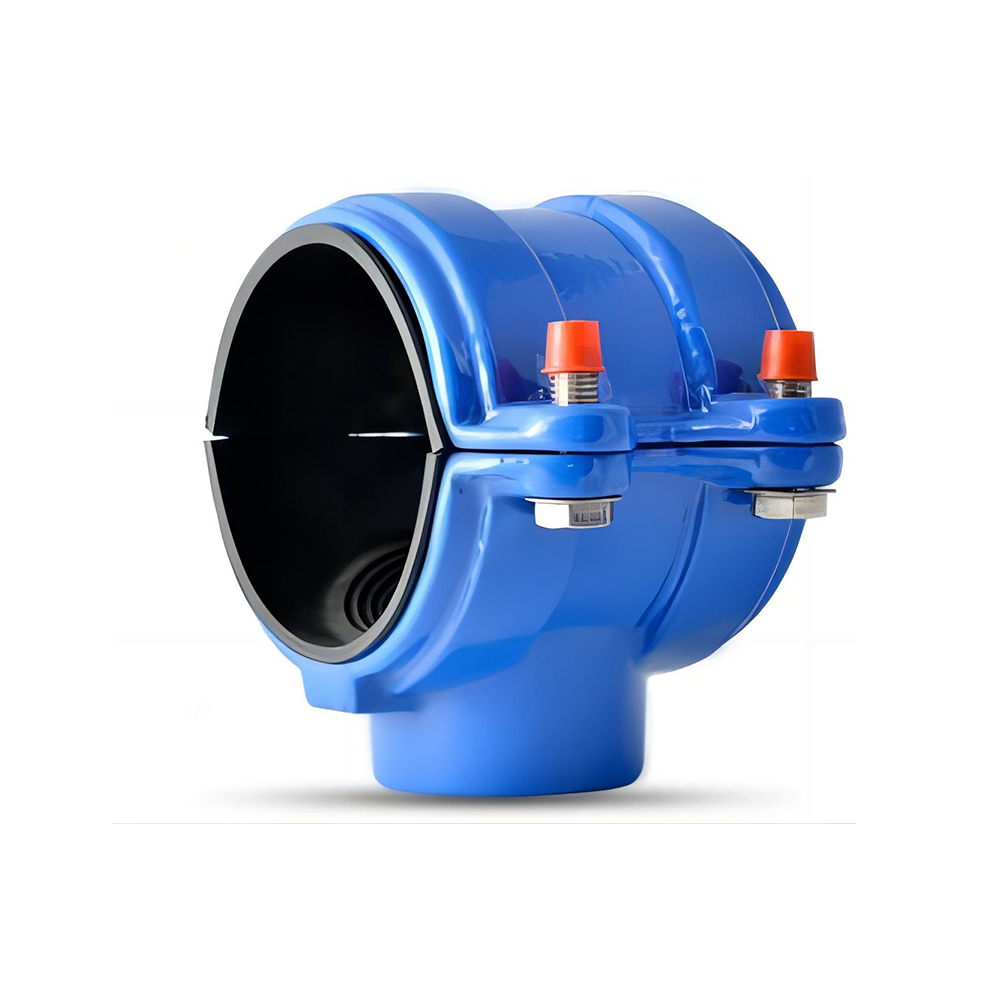
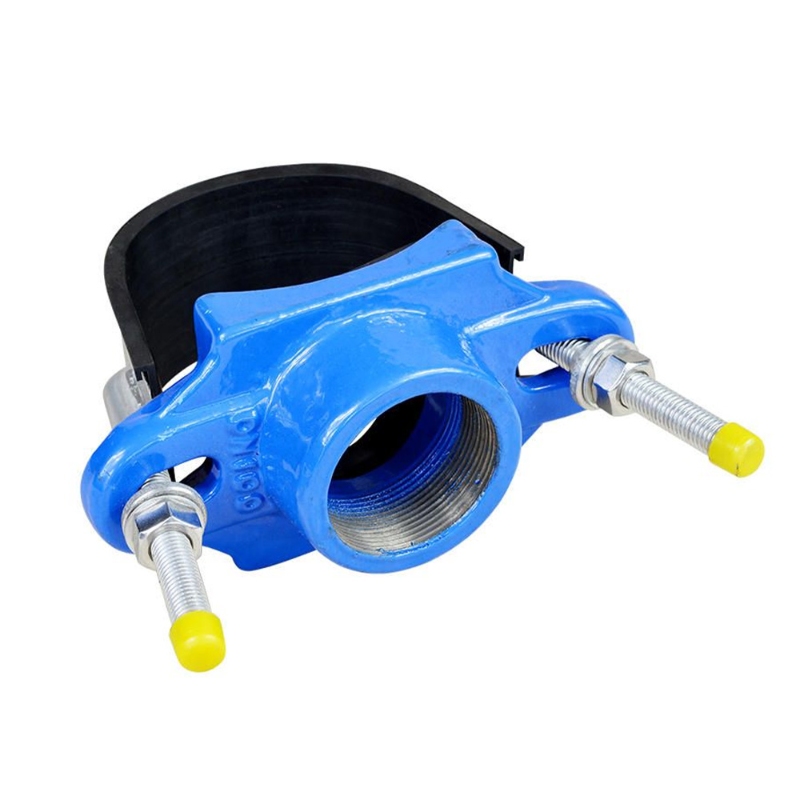
Related saddle clamps
Frequently asked questions
Saddle Clamp for DI Pipe FAQ
What pipe data is required for a DI saddle clamp?
State the ductile iron pipe standard, nominal size, measured outside diameter and coating condition. Add the required outlet size, thread or flange standard, pressure and branch orientation.
How should a ductile iron main be prepared before fitting the saddle?
Expose a sound section of pipe, clean the gasket seating area and inspect for surface damage or excessive coating build-up. Confirm that the selected tapping location provides adequate clearance and structural condition.
When should the DI main be drilled for the branch?
Drilling must follow the network operator’s approved tapping procedure. Confirm saddle alignment, gasket seating, bolt tightening, pressure control and swarf-removal requirements before cutting the main.
Ready for technical review?